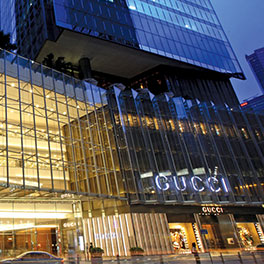
Hong Kong
The Landmark
Hongkong Land · Consultancy, leasing and brand marketing
The Landmark, Hong Kong
A retail space consultant helps owners decide who a destination should serve, what its retail offer should include and how that offer can appeal to suitable retailers. The physical plan supports those decisions through zoning, unit configurations, circulation and operating requirements.
Our work connects market evidence with the destination’s proposition. New retail concepts and new-to-market brands can form part of that offer where they fit its positioning and customer demand.
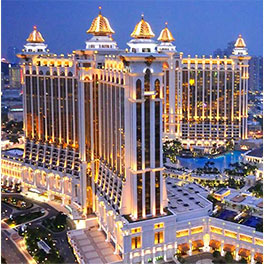 Galaxy Macau
Support the decisions ahead of your destination
The starting point is the commercial question you need to resolve. An appointment may help define a new destination, test an emerging proposal or shape the next phase of an established place.
Define the positioning and retail offer, then align the retail concept and physical plan with customers, retailer requirements and commercial objectives. Input on zoning, unit configurations, circulation, access and operating requirements supports tenant suitability, customer discovery and practical operation. Where appointed, we identify and engage relevant brands, including new-to-market brands.
Build on the destination’s existing strengths through customer, tenant, market and commercial insight. We help review the offer, identify priorities and develop a next-phase strategy. New retail concepts and new-to-market brands can form part of that evolution where appropriate to positioning and customer demand.
Both appointments are legitimate. They answer different questions, and the difference shows up in the merchandising plan.
| What it comes down to | Husband Retail | A global agency team |
|---|---|---|
| Who does the work | Paul Husband leads every mandate personally, with the same senior team from first meeting to handover. | Partners win the work; delivery passes to a rotating junior team. |
| Plan and leasing | The scope can cover a full leasing campaign or selected stages. | Planning and leasing usually sit in separate divisions, with separate incentives. |
| Luxury tenant access | Direct relationships with the brands, built over three decades of Asian luxury retail. | Broad coverage across all categories; luxury depth varies by market. |
| Number of mandates | Few at a time, by design. Your asset is not one file among hundreds. | Volume model; scale is the product. |
| When the answer is no | We say so in writing, before capex, and set out what would have to change. | Varies. A study that only says yes is not worth commissioning. |
For valuations, agency work at scale and market research, the large firms are often the right appointment. We are the narrower one.
Four documents, in this order. Each one is only as good as the study underneath it.
Trade area, catchment, competing supply and spend capture. The honest read of whether the scheme stacks up at the GLA proposed, and at what rent.
Who the centre is for, what it sells, and what it must feel like to beat the alternatives already open in that catchment.
The zoning document: categories to floors, adjacencies, anchor placement, unit sizes and the circulation those decisions depend on.
The target brand list, the order to approach it in, and the deal terms the plan can carry. Then the negotiation itself, heads of terms to signature.
A plan nobody signs is just paper.
Most consultancies describe their method. We would rather name the buildings.
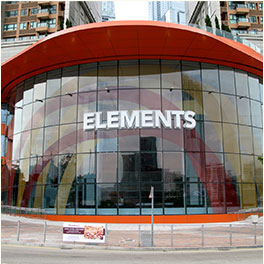
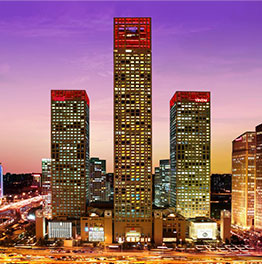
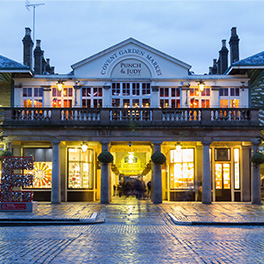

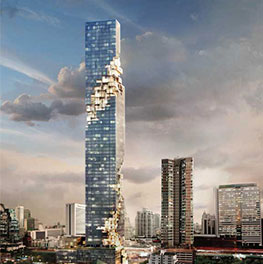
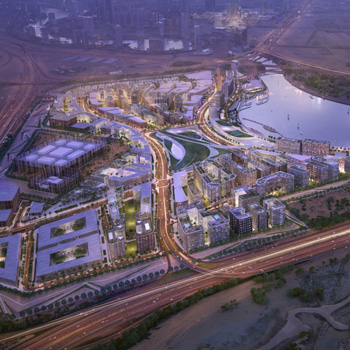
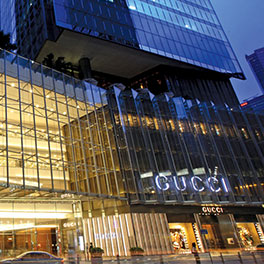
We have also acted for New World Development, Hysan, Link REIT, Ayala Land, Central Retail, Taubman, Westfield, KKR, Brookfield, Morgan Stanley and China Resources. None of this is a claim about ourselves. It is a list you can check.
Into the centres we planned we have brought Louis Vuitton · Chanel · Dior · Hermès · Cartier · Prada · Tiffany and Co. · Burberry, among others.
It begins with a conversation about one asset. Yours. We ask what you hold or intend to build, where it stands in its cycle, and what the mandate should deliver.
If we can do the work, we scope it and agree it with you before anything starts.
Someone who has negotiated heads of terms with a luxury brand’s head of real estate writes a very different merchandising plan from someone who has only modelled one. That combination — planning and leasing in the same hands — is rarer than it sounds.
We define the side we represent and the decisions we own at the start of the appointment.
It also keeps us small. We take few mandates and give each the founder’s time. If you want your asset treated as one file among hundreds, we are the wrong appointment.
The architect designs the building. We decide what the building has to contain to trade: the categories, the unit sizes, the anchors and the adjacencies. The two disciplines have to argue with each other early, on paper, before the drawings harden.
We can support retailers and occupiers with market entry, location strategy, property assessment and lease discussions. This is separate from landlord representation. We confirm the represented party and any conflict boundaries before starting the assignment.
Before the concept design is frozen. Most of the value is in decisions about unit sizes, servicing and circulation, and those get expensive to change once they are drawn.
We tell you, in writing, before you commit capex. It has happened. When the answer is no, we set out what would have to change for it to become yes.
We have recruited both, along with Chanel, Cartier, Prada and others, into centres we planned. No adviser can commit a named brand. We can shape the asset those brands ask for, then make the case to people we have dealt with for years.
More than 20 markets across Asia, the Middle East and Europe, from Hong Kong and Seoul to Doha, Dubai and London. We are based in Hong Kong and travel to the asset.
One message is enough to begin. Name the asset, its location and its stage: a site, a master plan, a scheme under construction, or a centre already trading.